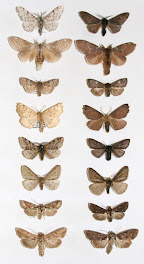
Friday, September 30, 2005
Bad Timing
Got to the Intelligent Design thread on the St. Louis Post-Dispatch blog a little late in the game. The thread died after several comments of mine. Darn it!
Read more!


20,000,000 Million Year Old Spider

The above is a picture of a 20,000,000 year old spider trapped in amber. Sciectists recently created an interesting method for studying the creature - shades of Jurassic Park.
According to BBC News:
Palaeontologist Dr David Penney, of the University of Manchester, found the 4cm long by 2cm wide fossil during a visit to a museum in the Dominican Republic.
Since the discovery two years ago, he has used droplets of blood in the amber to reveal the age of the specimen.
It is thought to be the first time spider blood has been found in amber and scientists hope to extract its DNA.
Even more interesting:
Dr Penney believes it was climbing up a tree 20 million years ago when it was hit on the head by fast flowing resin, became engulfed in the resin and died.
He claims the shape and position of the blood droplets revealed which direction the spider was travelling in and which of its legs broke first.
You can see more images of spiders trapped in amber atMesozoic Arachnids along with other interesting info about Mesozoic spiders.
Read more!
Gorillas Discovered Using Tools


In a study to be published in the November issue of PLOS Biology scientist announce they have discovered gorillas using tools. It has been known for quite some time that chimps use tools but no one had ever witnessed gorillas using tools in the wild. What makes this study so important, though, isn't the fact that gorillas were using tools. It's how they used them that made the study so important.
From New Scientist:
They saw a female gorilla nicknamed Leah attempting to wade through a pool of water created by elephants. After quickly sinking waist deep, she got out of the water and picked up a metre-long stick, says Breuer. She then re-entered the water and repeatedly prodded the stick ahead of her as if to test for depth. She advanced about 10 metres before returning to her wailing infant on the edge of the pool.
“It was exactly how you or I might have tested the depth of the water,” Breuer told New Scientist, by satellite phone from a forest clearing in Nouabalé-Ndoki.
A second example was also captured on film, when Efi, a gorilla from another group, used a stick to lean on for support while she foraged for food with her free hand. She then used the same stick as a bridge to help her cross a patch of swampy ground, says Breuer.
*snip*
“Both cases seem related to the problems of locomotion in this swampy forest clearing,” says Breuer. This suggests that the tool use stems from an ecological need.
“Most great ape tool use is based around the retrieval of food,” notes Gillian Sebestyen-Forrester who studies gorilla communication at the University of Sussex, UK. But the “incredibly intuitive” behaviour of using a stick to test water depth is something quite different, she says.
“The gorillas have understood in some capacity that they can extend their sensory experience and find out more about their environment by physically extending their bodies with an inanimate object,” she says. "This suggests that the gorilla is capable of some mental calculation and abstract thought."
Footprints of gorillas were found on branches in nearby clearings suggesting their use as bridges could be widespread, says Breuer.
From National Geographic News:
"The most fascinating thing about this observation is the similarity [to humans] with which the gorillas solve the problems in this particular habitat," he said. "If you or me want to cross a swamp, we use the same solutions as gorillas."
Like humans, the gorillas in the swampy clearing jump from one dry patch to another, walk over branches, swing from trees, and—as the observations and photographs now show—use tools.
Totally cool research!
Added Later: Abnormal Interests has a post on the gorillas as well.
Read more!
Darwin and the Quagga
If you have read any of Darwin's works you will recognize the Quagga. It is related to zebra. Darwin mentioned it in several of his works - at least once in connection with atavism (the idea that some organisms revert to some or all of their ancestral traits).

The two animals in the bottom row are quagga. They became extinct around a hundred years ago. Recently researchers, using hides and a skeleton in museum collections were able to unravel phylogeny and evolutionary history of the quagga:
Results indicate that the quagga descended from the plain's zebra some 120,000-290,000 years ago:
Sounds like a punctuational kind of event to me, but I haven't read the original study.
The two animals in the bottom row are quagga. They became extinct around a hundred years ago. Recently researchers, using hides and a skeleton in museum collections were able to unravel phylogeny and evolutionary history of the quagga:
The quagga, Equus quagga, a South African relative of horses and zebras, having a front half with zebra-like stripes and a back section like a horse with no marking, became extinct about 100 years ago. The pelt from a quagga museum specimen was the subject of tissue sampling that launched the field of ancient DNA analysis.
"Twenty years ago this exact species opened the field of ancient DNA studies on extinct animals," said one of the authors, Gisella Caccone, senior research scientist in the Department of Ecology and Evolutionary Biology at Yale. "Now, thanks to technological advances in the field, we revisited the story and used a population level approach to this question by analyzing a larger fragment of DNA and multiple specimens."
In the past, the quagga has alternatively been described as a species and a subspecies of the Plains zebra.These researchers asked how and when the quagga diverged from all the remaining related horses, zebras, and asses. They compared the genetics, coat color and habitats of existing zebras with related extinct species.
Results indicate that the quagga descended from the plain's zebra some 120,000-290,000 years ago:
These results suggest that the quagga descended from a population of plains zebras that became isolated and the distinct quagga body type and coloring evolved rapidly.
This study reveals that the Ice Age was important not just in Europe and North America, but also in Africa.
"The rapid evolution of coat color in the quagga could be explained by disrupted gene flow because of geographical isolation, an adaptive response to a drier habitat, or a combination of both of the two forces," said Caccone.
Sounds like a punctuational kind of event to me, but I haven't read the original study.
Read more!
The Best Laid Plans....
Originally in this post I was going to mention that the afarensis family was moving about five miles west in about a week and that I was busy packing. I was going to mention that blonging would be light, except on Sunday when I had a special post planned. Except, I was going to say, if I found any really interesting to blog about...
Read more!
Wednesday, September 28, 2005
Intelligent Design on the St. Louis Post-Dispatch Blog
I don't know how I missed this but the St. Louis Post-Dispatch blog has a thread on Intelligent Design. Some are against teaching it in schools. Others are for it. Some of the arguments in favor are pretty idiotic. For example, one person makes an argument about the speed of light slowing down (even the ICR stopped using that one), others trot out Behe, flagella and Mt. Rushmore. I've put my two cents in. There is still plenty enough silliness to go around if anyone wants to join the fun.
Read more!
Tuesday, September 27, 2005
Circus of the Spinless
 will be Friday. It is hosted by Tony at milkriverblog (whom I need to add to my blog roll - along with several others). Watch for it!
Read more!
Bone Eating Sea Worms
Below is a picture of a type of polychaeta belonging to the genus Osedax. They were recently discovered feasting on the skeleton of a juvenile grey whale. This ability of Osadax species to feed on skeletal material is quite interesting and - heretofore - unknown.
According to a recent article in Environmental Microbiology this is how it works. Like a some other sea worms (such as red tube worms)Osedax lack a mouth and functional gut. They also, unlike other sea worms, lack a trophosome (an internal organ that houses endosymbionts - sea worms with trophosomes derive nutrition from the endosymbionts).
Instead, Osedax species have a highly vascularized root system (r in the righthand picture above) that invades the bone marrow. The root system is connected to a large eggsac (o in the righthand picture above). Both eggsac and root system are filled with bacteriocytes. This is where the story gets even more interesting. Normally, the bacteria found in most sea worms are autotrophic, that is, they produce their own food. Osedax bacteria, on the otherhand, are hetertrophic. The way the symbiotic relatonship was established makes for fascinating reading and I strongly recommend you follow the link and read for yourself (you should probably reread my posts on stable isotope analysis first).
According to a recent article in Environmental Microbiology this is how it works. Like a some other sea worms (such as red tube worms)Osedax lack a mouth and functional gut. They also, unlike other sea worms, lack a trophosome (an internal organ that houses endosymbionts - sea worms with trophosomes derive nutrition from the endosymbionts).
Instead, Osedax species have a highly vascularized root system (r in the righthand picture above) that invades the bone marrow. The root system is connected to a large eggsac (o in the righthand picture above). Both eggsac and root system are filled with bacteriocytes. This is where the story gets even more interesting. Normally, the bacteria found in most sea worms are autotrophic, that is, they produce their own food. Osedax bacteria, on the otherhand, are hetertrophic. The way the symbiotic relatonship was established makes for fascinating reading and I strongly recommend you follow the link and read for yourself (you should probably reread my posts on stable isotope analysis first).
Read more!
Austrian Twins Update

The above is a picture of the 27,000 year old infant skeletons discovered in Austria. New Scientisist has a story on them as well:
The remains have yet to be carbon-dated but are thought to be at least 27,000 years old, because other artefacts from the area have been dated to between 40,000 and 27,000 years old. During this period, which falls within the Upper Palaeolithic, Neanderthals were superseded by modern humans, who were developing increasingly sophisticated hunting abilities and forms of culture.
The babes were placed side by side in their grave and protected beneath a woolly mammoth's shoulder blade, which was propped up by pieces of mammoth tusk. The bodies were wrapped in a material such as animal hide that has since deteriorated and were covered with ochre.
*snip*
The pair has been moved to Vienna's Natural History Museum, where they will be examined further and carbon-dated by Maria Teschler-Nicole. She will place the remains within a chamber with controlled humidity in order to limit further deterioration.
Read more!
Monday, September 26, 2005
Mexican Footprints: An Update
Readers may remember the footprints found in Mexico that have been dated to about 40,000 years BP. Geotimes has an interesting story on the subject:
The dissenting opinion:
Even more interesting, there is a link to the Mexican Footprints Website Which contains a wide variety of information on the geology, dating methods, etc. Based on what I saw at the site I am a little less skeptical - although I still have some reservations.
In summer 2003, researchers Matthew Bennett of Bournemouth University and Silvia Gonzalez and David Huddart of Liverpool John Moores University in the United Kingdom were dating and mapping the geology of the Valsequillo Basin in Mexico, about 130 kilometers south of Mexico City, when they came across what appeared to be footprints on the floor of an abandoned quarry. Examining the site further, they found the site littered with footprints, Bennett says — 269 individual prints of humans and animals intermingled.
Sixty percent of the footprints appear to be human, with telltale arches and impressions of the heels, balls and toes, and 36 percent of those appear to be child-sized, according to the researchers, whose work is in press in Quaternary Science Reviews. The remaining 40 percent of the prints were from a variety of animals, Bennett says, including dogs, big cats and animals with cloven hooves, such as deer and camels. The researchers also found mastodon and mammoth teeth.
Previously, in the 1960s and 1970s, archaeologists found megafaunal remains, including bones that had been “worked” with tools, scattered throughout the basin. Those remains had been unreliably dated to be between 20,000 and 40,000 years old, Bennett says, so the sites have been somewhat ignored since then.
The footprints are preserved in a layer of volcanic ash from the eruption of Cerro Toluquilla beneath a shallow lake in the Valsequillo Basin just over 40,000 years ago. “Volcanic ash lithifies quickly, like cement,” Bennett says, so when the inhabitants of the lake shores wandered across the mucky ash, their footprints were captured. When lake levels later rose, water washed over the footprints, burying them in lake sediments, he says. “So we have this great stratigraphic sequence” of lake sediments, topped by ash, which is then topped again by lake sediments, Bennett says, that can be dated.
The dissenting opinion:
But Michael Waters, a geoarchaeologist at Texas A&M University in College Station, is not convinced. He says that the ash layer is likely much older than 40,000 years, and should be retested using different methods. Furthermore, says Waters, who has visited the site, “I have serious reservations as to whether or not these are even footprints, human or animal.” The site has been so extensively quarried over the years, being chopped with axes and picks, that these imprints could just be tool marks that have weathered.
The team, Waters says, needs to find tracks in outcrops or areas that have not been quarried — “look for them like you would look for dinosaur or other trackways.” Bennett says that he and his colleagues are planning to begin just such excavations soon.
Even more interesting, there is a link to the Mexican Footprints Website Which contains a wide variety of information on the geology, dating methods, etc. Based on what I saw at the site I am a little less skeptical - although I still have some reservations.
Read more!
Two 27,000 Year Old Baby Skeltons Found in Austria
News 24 is reporting that two 27,000 year old skeletons - believed to be from twins - have been found in Austria:
Other news sources have reported it as well but all contain about the same amount of info as the above. For example this from Live Science:
Interesting, because the burial was intentional and because of the age of the find.
The 27 000 year old skeletons of two ice age infants have been found near Krems in northern Austria, the first discovery of its kind in Europe, the Austrian press reported on Saturday.
The perfectly preserved skeletons measuring 40cm had been protected by a mammoth's shoulder-blade bone, under which they had been buried on a sheltered hillside on the banks of the Danube river.
The grave, discovered 5.5m below ground, also contained a necklace of 31 pearls made from mammoth ivory and was located next to an area inhabited by ancient "homo sapiens fossilis", newspapers reported.
"It is the first discovery of a child's grave dating from this period," confirmed the excavation manager, Christine Neugebauer-Maresch, to the daily newspaper Kurier. "They may have been twins, but we have not yet been able to establish that," she told Die Presse.
The age of the skeletons will be analysed by the Institute of Natural Sciences in Vienna, which will also determine the cause of death.
"Homo sapiens fossilis" came out of Asia during the ice age as Neanderthal Man was dying out, and mastered stone and wood, but did not discover metal.
Other news sources have reported it as well but all contain about the same amount of info as the above. For example this from Live Science:
Archaeologists have uncovered the remains of two newborns dating back 27,000 years while excavating a hillside in northern Austria, the scientist in charge of the project said Monday.
Last week's find near the Danube River city of Krems is important because the newborns were buried beneath mammoth bones and with a string of 31 beads _ suggesting that the internment involved some sort of ritual, said Christine Neugebauer-Maresch, the project's leader at the Austrian Academy of Sciences.
"They could be twins,'' she said. "They have the same (length) limbs and were buried together.''
The burial _ one of the oldest in the region _ is also significant in that the children were not simply disposed of after their deaths, Neugebauer-Maresch said. The burial suggests "they were members of society,'' she said.
Archaeologists are combing the area to see if the infants' mother is nearby, as giving birth to twins in that era would have been extremely difficult and potentially fatal.
Interesting, because the burial was intentional and because of the age of the find.
Read more!
Saturday, September 24, 2005
My Politics
| You are a Social Liberal (71% permissive) and an... Economic Liberal (11% permissive) You are best described as a:
Link: The Politics Test on Ok Cupid |

Read more!
Cute Animal Quiz
Via An Ethereal Girl's Adventures in Cyberland
 These reptiles, famous for their hard outer shells, spent their days roaming for food and relaxing in the water. As a turtle you are not very speedy, nor are you soft and cuddly. You tend to hide in your shell and you aren't much of a sprinter, but you are quite tough. You also happen to be as cute as you are fascinating.
You were almost a: Bear Cub or a Frog
You are least like a: Puppy or a SquirrelCute Animal Quiz!
Word! Although being a bear cub would have been cool.
You Are A: Turtle!
These reptiles, famous for their hard outer shells, spent their days roaming for food and relaxing in the water. As a turtle you are not very speedy, nor are you soft and cuddly. You tend to hide in your shell and you aren't much of a sprinter, but you are quite tough. You also happen to be as cute as you are fascinating.You were almost a: Bear Cub or a Frog
You are least like a: Puppy or a SquirrelCute Animal Quiz!
Word! Although being a bear cub would have been cool.
Read more!
A Cool Idea
Henry's Webiocosm has a cool idea (which I am shamelessly pilfering)! Learn something new about a random organism.
I learned about: Cambarus (Glareocola) brachydactylus a plant that inhabits tributaries of the Cumberland River in Tennessee.
What did you learn about?
I learned about: Cambarus (Glareocola) brachydactylus a plant that inhabits tributaries of the Cumberland River in Tennessee.
What did you learn about?
Read more!
Thursday, September 22, 2005
Noodles in Spaaaaceee
Truely, the Flying Spaghetti Monster works in mysterious ways:
Brothers and Sisters in his infinite wisdom he is making sure we have adequate provender as we go to Mars:
I suggest we send FSM evangelists to Japan immediately as the ground seems fertile for converting many:
Truely, the Japanese have been touched by his noodley appendage!
RAmen
Nissin Food Products announced Monday it will collaborate with Japan's Space Agency, NASDA, to make instant noodles that can be eaten on space missions.
``Space Ram'' _ that's short for ramen, the name for Japan's favorite slurpable snack _ will be made especially for astronauts flying on the Kibo research module, Japan's contribution to the International Space Station, Nissin said in a press release.
Brothers and Sisters in his infinite wisdom he is making sure we have adequate provender as we go to Mars:
Nissin said its top researchers will be devoting their noodles to making a product that tastes good and doesn't fall apart in zero gravity. The goal? ``To create the ultimate light snack.''
``This is also in response to a strong wish by our chairman Momofuku Ando, who invented the instant noodle, to create food for outer space,'' the company said.
NASDA's Kibo research module will be launched by the U.S. space shuttle to the space station in three separate shots beginning in 2004. Nissin plans to have its extraterrestrial noodles ready by then.
Ando, affectionately known in Japan as the ``noodle king,'' is credited with revolutionizing the eating habits of his nation and turning instant ramen into a multi-billion dollar business here.
Noodle fanatics can visit a faithful recreation of the wooden shack where Ando created instant ramen 44 years ago at the Instant Noodle Museum in western Japan.
I suggest we send FSM evangelists to Japan immediately as the ground seems fertile for converting many:
In Japan, instant ramen ingenuity is not just limited to dreams of outer space. At convenience stores around the nation, entire shelves are devoted to noodles that come in tastes that range from Korean ``kimchi'' cabbage to spicy cod roe spaghetti.
The snack, voted in a recent Japanese poll as ``the food of the century,'' is such big business that instant noodle makers from around the world converge on Tokyo every other year for the summit of the Instant Ramen Manufacturers' Association. Ando is chairman.
Truely, the Japanese have been touched by his noodley appendage!
RAmen
Read more!
Interesting News on RNA, DNA and the Evolution of Protein
Regular readers of this blog know that I that I get a lot of science news from Science Daily and frequently turn that news into a post. This post is no exception. I have come across several interesting articles on RNA, DNA, protein evolution and lifes origins (one of which I have blogged about before).
The first concerns the RNA world:
Recent research has indicated a likely way around the limiting factor of length mainly because the replication error rate is higher than previously thought:
This is important because previous research indicates that the minimum number of DNA genes needed for simple organisms is about 200 but:
Which brings us to the second article (published in 2002). Two scientists at the Scripps Research Center created an enzyme based on a binary genetic code - that is a genetic code having only two different subunits (which I assume means bases). The research demonstrated that evolution can occur in a genetic system composed of two bases and shows that an early life form could exist with only two bases:
*snip*
Which brings us to the third article (published in April of 05). Scientists at Scripps Research Center successfully created a third base pair. There are basically only two in DNA guanine-cytosin and adenine-thymine:
Which demonstrates that it is possible for things to have evolved from a system with just say g-c or a-t to a system with both.
Which brings us to the fourth article (which I have blogged about previously):
*snip*
*snip*
Which brings us to the fifth article which discusses the evolution of proteins:
*snip*
Here is how it works:
Put them all together and a theory about the origins of life begins to emerge. The is one caveat though (going back to the second article):
*snip*
The part in bold is, if you ask me, the most important point of the second article. We may never be able to have an exact blow by blow account of life's origins. What we can do, however, is indicate that under a certain set of given conditions life can arise. More importantly, we should eventually be able to indicate the conditions under which life can be expected to arise. The two are different. In the first case (think the Miller-Urey experiments) the initial conditions are specified and life may or may not develop under those circumstances. The point is that you are applying a theory to a particular case. The second instance is more generalized - or better yet operates at a higher theoretical level. In this case we can specify a range of conditions under which life should develop.
But, those of you who know a lot about science may be thinking "what about Brownian Motion?" "Surely", you say "Einstein proves everything you have just written is wrong" This brings us to our sixth article which is actually about UV damage to DNA rather than Brownian Motion. It is relevant, however:
*snip*
*snip*
Although Brownian Motion and UV radiation are two different things I would expect that the energy gained via the effects of Brownian Motion (I assume Birdnow meant that - well never mind I'm not sure what Birdnow meant)would be dissapated in a similar manner.
The first concerns the RNA world:
In the primordial soup that produced life on earth, there were organic molecules that combined to produce the first nucleic acid chains, which were the first elements able to self-replicate. According to one of the more accepted theories, these molecules were ribonucleic acid (RNA) chains, a molecule that is practically identical to DNA and that today has the secondary role in cells of copying information stored in DNA and translating it into proteins. These proteins have a direct active role in the chemical reactions of the cell. In the early stages of life, it seems that the first RNA chains would have had the dual role of self-replicating (as is today the case with DNA) and participating actively in the chemical reactions of the cell activity. Because of their dual role, these cells are called ribozymes (a contraction of the words ribosome and enzyme). But there is an important obstacle to the theory of ribozymes as the origin of life: they could not be very large in length as they would not be able to correct the replication errors (mutations). Therefore they were unable to contain enough genes even to develop the most simple organisms.
Recent research has indicated a likely way around the limiting factor of length mainly because the replication error rate is higher than previously thought:
In practice, this means that the first riboorganisms (protocells in which RNA is responsible for genetic information and metabolic reactions) could have a much bigger genome than was previously thought: they could contain more than 100 different genes, each measuring 70 bases in length (bases are the units that constitute the genes and codify the information), or more than 70 genes, each measuring 100 bases. It is worth remembering that tRNAs (essential molecules for the synthesis of proteins) are approximately 70 bases long.
This is important because previous research indicates that the minimum number of DNA genes needed for simple organisms is about 200 but:
But in riboorganisms there can be much fewer genes, since DNA genomes include a number of genes that have the role of making the RNA translation system (which enables proteins to be produced) work, which would not be required in RNA-based organism.
Which brings us to the second article (published in 2002). Two scientists at the Scripps Research Center created an enzyme based on a binary genetic code - that is a genetic code having only two different subunits (which I assume means bases). The research demonstrated that evolution can occur in a genetic system composed of two bases and shows that an early life form could exist with only two bases:
Where protein enzymes are polymer strings made up of 20 building blocks (the amino acids), and RNA or DNA enzymes are made up of four different building blocks (the nucleotides), the world's first binary enzyme has but two different building blocks, based on the nucleotides A and U.
This enzyme is functionally equivalent to a "polymerase" molecule. Polymerases are ubiquitous in nature as the enzymes tasked with taking a "template" string of DNA or RNA bits and making copies of it.
Reader and Joyce's binary enzyme is able to join pieces of RNA that are composed of the same two nucleotide symbols. In the test tube, the binary string folds into an active three-dimensional structure and uses a portion of this string as a template. On the template, it "ligates," or joins subunits together, copying the template.
*snip*
One of the great advances in the last few decades has been the notion that at one time life was ruled by RNA-based life--an "RNA world" in which RNA enzymes were the chief catalytic molecules and RNA nucleotides were the building blocks that stored genetic information.
"It's pretty clear that there was a time when life was based on RNA," says Joyce, "not just because it's feasible that RNA can be a gene and an enzyme and can evolve, but because we really think it happened historically."
However, RNA is probably not the initial molecule of life, because one of the four RNA bases--"C"--is chemically unstable. It readily degrades into U, and may not have been abundant enough on early Earth for a four-base genetic system to have been feasible.
Which brings us to the third article (published in April of 05). Scientists at Scripps Research Center successfully created a third base pair. There are basically only two in DNA guanine-cytosin and adenine-thymine:
Scripps Research scientists’ DNA has a third pairing: “3FB-3FB” between two unnatural bases called 3-fluorobenzene (or 3FB). Unlike other unnatural base pairs, DNA polymerases are able to replicate this base pair, albeit with reduced fidelity. To improve replication, the scientists also reported the development of a system capable of evolving polymerases to better recognize 3FB in DNA. Using a selection system some liken to evolution in the test tube, they are creating their own “polymerase” enzyme able to replicate the unnatural DNA.
While the polymerase does not replicate the unnatural DNA with the same fidelity observed in nature, (roughly one mistake for every 10 million bases of DNA copied), its fidelity is reasonable (typically making only one mistake for every 1000 base pairs). This is the first time anyone has been able to replicate unnatural DNA with fidelity against every possible mispair.
Which demonstrates that it is possible for things to have evolved from a system with just say g-c or a-t to a system with both.
Which brings us to the fourth article (which I have blogged about previously):
As the DNA ‘alphabet’ contains four letters - called bases - there are as many as 64 three-letter words available in the DNA dictionary. This is because it is mathematically possible to produce 64 three-letter words from any combination of four letters.
But why there should be 64 words in the DNA dictionary which translate into just 20 amino acids, and why a process that is more complex than it needs to be should have evolved in the first place, has puzzled scientists for the last 40 years.
*snip*
One of quirks of the genetic code is that there are groups of codons which all translate to the same amino acid. For example, the amino acid leucine can be translated from six different codons whilst some amino acids, which have equally important functions and are translated in the same amount, have just one.
The new theory builds on an original idea suggested by Francis Crick - one of the discoverers of the structure of DNA - that the three-letter code evolved from a simpler two-letter code, although Crick thought the difference in number was simply an accident “frozen in time”.
The University of Bath researchers suggest that the primordial ‘doublet’ code was read in threes - but with only either the first two ‘prefix’ or last two ‘suffix’ pairs of bases being actively read.
By combining arrangements of these doublet codes together, the scientists can replicate the table of amino acids - explaining why some amino acids can be translated from groups of 2, 4 or 6 codons. They can also show how the groups of water loving (hydrophilic) and water-hating (hydrophobic) amino acids emerge naturally in the table, evolving from overlapping ‘prefix’ and ‘suffix’ codons.
“When you evolve our theory for a doublet system into a triplet system, you get an exact match up with the number and range of amino acids we see today,” said Dr van den Elsen, who has worked with Dr Stefan Babgy and Huan-Lin Wu on the theory.
*snip*
The theory also explains how the structure of the genetic code maximises error tolerance. For instance, ‘slippage’ in the translation process tends to produce another amino acid with the same characteristics, and explains why the DNA code is so good at maintaining its integrity.
“This is important because these kinds of mistakes can be fatal for an organism,” said Dr van den Elsen. “None of the older theories can explain how this error tolerant structure might have arisen.”
The new theory also highlights two amino acids that can be excluded from the doublet system and are likely to be relatively recent ‘acquisitions’ by the genetic code. As these amino acids - glutamine and asparagine - are unable to hold their shape in high temperatures, this suggests that heat prevented them from being acquired by the code at some point in the past.
One possible reason for this is that the Last Universal Common Ancestor (LUCA), which evolved into all life on earth, lived in a hot sulphurous pool or thermal vent. As it moved into cooler conditions, it was able to take up these two additional amino acids and evolve into more complex organisms. This provides further evidence for the debate on whether life emerged from a hot or cold primordial soup.
Which brings us to the fifth article which discusses the evolution of proteins:
By examining how proteins have evolved, UT Southwestern Medical Center researchers have discovered a set of simple "rules" that nature appears to use to design proteins, rules the scientists have now employed to create artificial proteins that look and function just like their natural counterparts.
*snip*
"The goal of our research was not to find another way to make artificial proteins in the lab, but to discover the rules that nature and evolution have used to design proteins," Dr. Ranganathan said. "The rules we have extracted from the evolutionary record of proteins contain a substantial fraction of the information required to rebuild modern-day proteins. We're building solutions so close that, at least in a test tube, we can't tell them apart from natural proteins."
Here is how it works:
"How did nature devise the right sequences that resulted in functioning proteins? Somehow, it found a way," Dr. Ranganathan said. "One implication of our work is that the evolutionary protein-design process may not be as complex as was previously thought." (oooh, Behe's going to be bummed - afarensis)
Earlier research has shown that for a given group of related proteins, or protein family, all family members share common structures and functions. By examining more than 100 members of one protein family, the UT Southwestern group found that the proteins share a specific pattern of amino acid selection rules that are unique to that family.
"What we have found is the body of information that is fundamentally ancient within each protein family, and that information is enough to specify the structure of modern-day proteins," Dr. Ranganathan said.
He and his team tested their newly discovered "rules" gleaned from the evolutionary record by feeding them into a computer program they developed. The program generated sequences of amino acids, which the researchers then "back-translated" to create artificial genes. Once inserted into laboratory bacteria, the genes produced artificial proteins as predicted.
"We found that when isolated, our artificial proteins exhibit the same range of structure and function that is exhibited by the starting set of natural proteins," Dr. Ranganathan said. "The real test will be to put them back into a living organism such as yeast or fruit flies and see how they compete with natural proteins in an evolutionary sense."
Put them all together and a theory about the origins of life begins to emerge. The is one caveat though (going back to the second article):
If the origins of life are a philosopher's dream, then they are also a historian's nightmare. There are no known "sources," no fossils, that show us what the very earliest life on earth looked like.
*snip*
Since the fossil record may not show us how life began, what scientists can do is to determine, in a general way, how life-like attributes can emerge within complex chemical systems. The goal is not necessarily to answer how life did emerge in our early, chemical world, but to discover how life does emerge in any chemical world--to ask not just what happens in the past, but what happens in general.
The part in bold is, if you ask me, the most important point of the second article. We may never be able to have an exact blow by blow account of life's origins. What we can do, however, is indicate that under a certain set of given conditions life can arise. More importantly, we should eventually be able to indicate the conditions under which life can be expected to arise. The two are different. In the first case (think the Miller-Urey experiments) the initial conditions are specified and life may or may not develop under those circumstances. The point is that you are applying a theory to a particular case. The second instance is more generalized - or better yet operates at a higher theoretical level. In this case we can specify a range of conditions under which life should develop.
But, those of you who know a lot about science may be thinking "what about Brownian Motion?" "Surely", you say "Einstein proves everything you have just written is wrong" This brings us to our sixth article which is actually about UV damage to DNA rather than Brownian Motion. It is relevant, however:
In the current issue of the journal Nature, Bern Kohler and his colleagues report that DNA dissipates the energy from ultraviolet (UV) radiation in a kind of energy wave that travels up the edge of the DNA molecule, as if the energy were climbing one side of the helical DNA “ladder.”
The finding lends insight into how DNA damage occurs along the ladder's edge.
It also counters what scientists proposed in the 1960s: that UV causes mutations by damaging the bonds between base pairs – the horizontal “rungs” on the ladder. The new study shows that UV energy moves vertically, between successive bases.
*snip*
In undamaged DNA, there are no chemical bonds between vertically stacked bases. But the bases do interact electronically, which is why Kohler thinks they form an efficient conduit for UV energy to flow through.
“Even though paired bases are connected by weak chemical bonds, it's the interactions that take place without chemical bonds – the interactions between stacked bases – that are much more important for dissipating UV energy,” Kohler said.
*snip*
Their new experiments show that the behavior of full DNA differs profoundly from that of isolated bases. When the chemists turned their strobe light on whole strands of novel DNA, the UV energy still changed to heat eventually, but the energy dissipated a thousand times more slowly.
That's an eternity in the DNA universe, where scientists need to use special equipment just to see these ultra-fast chemical reactions happen. Yet, Kohler's team saw no evidence that the UV affected the chemical bonds between the base pairs. They surmised that the UV energy was leaving the molecule by traveling along the edges instead.
“This slow relaxation of energy is utterly different from the mechanism in single bases that transforms the energy into heat in less than a trillionth of a second,” Kohler said.
“Eventually, the energy does turn into heat, but the important point is that the energy is retained within the molecule for much longer times,” he added. “This can cause all kinds of photochemical havoc.”
It could be that when base pairs are aligned in their natural state in a DNA strand, the electronic interactions along the stack provide an easier way for DNA to rid itself of UV energy, compared to passing the energy back and forth between the two bases in a base pair as scientists have previously thought.
Although Brownian Motion and UV radiation are two different things I would expect that the energy gained via the effects of Brownian Motion (I assume Birdnow meant that - well never mind I'm not sure what Birdnow meant)would be dissapated in a similar manner.
Read more!
Wednesday, September 21, 2005
New Meme
Via Profgrrrrl and Pharyngula
Rules:
1. Go into your archive.
2. Find your 23rd post (or closest to).
Mine's from 2/02/05, a post titled " Lest You Think It's Just Evolution"
3. Find the fifth sentence (or closest to).
4. Post the text of the sentence in your blog along with these instructions.
The fifth sentence reads:
Added Later: I left off two r's in Profgrrrrl's name - this has been corrected. You'd think I'd do better research - being a science blogger.
Rules:
1. Go into your archive.
2. Find your 23rd post (or closest to).
Mine's from 2/02/05, a post titled " Lest You Think It's Just Evolution"
3. Find the fifth sentence (or closest to).
4. Post the text of the sentence in your blog along with these instructions.
The fifth sentence reads:
Therefore, everything has meaning and reflection on his nature, whether it is math or history or science. Two plus two equals four because God created them that way,” (emphasis mine)said Glen Schultz, who heads the Baptists’ LifeWay curriculum program for church-based schools and home-schoolers.
Added Later: I left off two r's in Profgrrrrl's name - this has been corrected. You'd think I'd do better research - being a science blogger.
Read more!
It's Lurker Day!
At least according to Pharyngula, Chris Clarke and Feministe anyway. So all you folks who lurk at my blog say Hi, tell me what you think (besides the fact that you think my blog is the greatist blog ever, etc), tell me what you like (wohoo more posts about bones, etc) or don't like (aack no more posts about bones, we will run away if you do, etc). Today, you lurkers can talk and I'll listen! Even if you only came for spider pics!
Read more!
Tuesday, September 20, 2005
Neanderthal Teeth: How Did They Grow?

The above is a human tooth. If you look closely you can see faint grooves running horizontally across it's surface. These grooves are called perikymata and represent growth. More specifically they represent growth cycles of about 6-14 days. Below is a high magnification detail from a thin section.

High magnification detail from the same thin section showing the regular growth structures found in enamel (polarised transmitted light microscopy). The approximately weekly growth layers, known as brown striae of Retzius, can be seen running from bottom left to top right. The enamel prisms run across from left to right, along which cross-striations can be seen (arrows). The cross-striations represent circadian (i.e. daily) growth markers and can be used to determine the precise timing of crown formation, as well as the timing of any disruption to this formation.
In theory one could count the number of perikymata on a tooth multiply it by 6-12 days and come up with an estimate of how long it took the tooth to form - getting at the same time an estimate of the length of childhood. Such studies have a long history in anthropology and recently this idea was applied to Neanderthal teeth. At issue is how long Neanderthals took to reach maturity - if they took less time than anatomically modern humans then that would obviously have bearing on the whole "Out of Africa/Multiregional Continuity" debate.
Recently a team of researchers performed a study on the perikymata of Neanderthal teeth:
For the study, the researchers used precise dental impressions Guatelli-Steinberg and Larsen made of 55 teeth believed to come from 30 Neanderthal individuals. These were compared to 65 teeth from 17 Inuit, 134 teeth from 114 southern Africans and 115 teeth from as many Newcastle residents. In all cases, the researchers tallied the number of perikymata on the enamel surface of the teeth.
Guatelli-Steinberg said that the results showed that the enamel formation times for the Neanderthals fell easily within the range of time shown by teeth from the three modern populations – a conclusion that did not support a shorter childhood for the Neanderthals.
Enticing though it may be, these new findings haven't convinced the researchers that a Neanderthal childhood was equal to a modern human's.
“The missing key bit of data to show that would be evidence for when the first molar tooth erupted in the Neanderthals, and we simple have no evidence of when that occurred,” she said.
The length of time is important, the researchers say, because unlike all other primates, humans have an extended period of childhood growth, during which brain matures both in size and through experiences. Some earlier hominids matured far more quickly than modern humans.
“The question is when exactly did that pattern of development evolve in the growth of humans,” she said.
Read more!
Monday, September 19, 2005
Tiger Salamanders and Evolutionary Change
A recent article published in BMC Ecology casts an interesting light on tiger salamander evolution:
The entire paper can be found here
Researchers analysed a late-Holocene fossil record to track morphological traits in the Tiger Salamander through the last 3,000 years. The team, led by Elizabeth Hadly from Stanford University, United States, analysed trends in the fossil record within the context of known climate change, to distinguish patterns of response correlating to specific climatic periods during this time.
The fossils were all collected from Lamar Cave in Yellowstone National Park in Wyoming, United States. The cave deposits were dated and divided into five time periods according to their estimated age. The researchers then grouped the fossils into four morphologically distinct groups: young larval, paedomorphic, young terrestrial or old terrestrial, and measured the body size index (BSI) of fossils in each group and time period.
The team found that paedomorphic individuals - sexually mature, yet still aquatic and retaining larval characteristics - were much smaller than terrestrial adult individuals, during the Medieval Warm Period (MWP). The authors claim that this is eveidence for a response to warm and dry climate conditions, which allowed a terrestrial ectotherm to flourish. They conclude that the fossil record of the Tiger Salamander reflects known climatic conditions during the MWP, a time period characterised by a warm and dry climate that occurred approximately 1150 to 650 years ago.
The entire paper can be found here
Read more!
Museums and the Creationist challange
Via The Panda's Thumb comes this interesting article on how museums are responding to challanges by creationists. I think it's kind of sad that museums have to devote their resources to this kind of thing.
Challenged by Creationists, Museums Answer Back
Challenged by Creationists, Museums Answer Back
Read more!
IBM Promotes Science and Math Education
Arr! Me fine beauties at IBM be sailing on a fair tack and close hauled they be! From the lubbers at CNN:
Avast ye dogs, there be more to the story:
For you scurvey dog's who speak nary a drop of lubber this means they be takin older pirates fit for nought but a trip to Davy Jone's locker and be retrainin so's they can teach all the new cabin lads and lasses so's they can enjoy the booty that comes with a career in science and math.
Yo Ho, me hearties this be a worthy thing they do, lift yer Rum cups high and salute them or ye be walking the planks for sure.
"Over a quarter-million math and science teachers are needed, and it's hard to tell where the pipeline is," said Stanley Litow, head of the IBM Foundation, the Armonk, New York-based company's community service wing. "That is like a ticking time bomb not just for technology companies, but for business and the U.S. economy."
While many companies encourage their employees to tutor schoolchildren or do other things to get involved in education, IBM believes it's the first to guide workers toward switching into a teaching career.
Avast ye dogs, there be more to the story:
The company expects older workers nearing retirement to be the most likely candidates, partly because they would have more financial wherewithal to take the pay cut that becoming a teacher likely would entail.
The workers would have to get approval from their managers to participate. If selected, the employees would be allowed to take a leave of absence from the company, which includes full benefits and up to half their salary, depending on length of service.
In addition, the employees could get up to $15,000 in tuition reimbursements and stipends while they seek teaching credentials and begin student-teaching.
From then on, the IBM people would become school employees -- the program will encourage them to work in public schools but they can go private if they wish -- and leave Big Blue's payroll.
But IBM plans to offer a mentoring program that would give its former workers guidance and teaching materials over the Internet.
For you scurvey dog's who speak nary a drop of lubber this means they be takin older pirates fit for nought but a trip to Davy Jone's locker and be retrainin so's they can teach all the new cabin lads and lasses so's they can enjoy the booty that comes with a career in science and math.
Yo Ho, me hearties this be a worthy thing they do, lift yer Rum cups high and salute them or ye be walking the planks for sure.
Read more!
Sunday, September 18, 2005
Pirate Movie Sunday
Since I can't do too much to celebrate National Talk Like a Pirate tomorrow (other than talking like a pirate) I am doing a little celebrating today by watching a bunch of pirate movies. Here are the movies I'm hoping to get through:
The Seahawk - not a bad Errol Flynn movie, though Captain Blood was better
The Black Swan - Tyrone Powers at his best
The Swashbuckler - Robert Shaw rocks
Pirates of The Carribean - Geoffrey Rush steals this movie
Princess Bride - Dread Pirate Roberts and all
The Seahawk - not a bad Errol Flynn movie, though Captain Blood was better
The Black Swan - Tyrone Powers at his best
The Swashbuckler - Robert Shaw rocks
Pirates of The Carribean - Geoffrey Rush steals this movie
Princess Bride - Dread Pirate Roberts and all
Read more!
Talk Like a Pirate Day is Tomorrow

And for those who lack the proper verbal skills or vocabulary here is a primer.
And remember, the Code is more like guidelines than actual rules...

Read more!
Saturday, September 17, 2005
Frog Fungus (Batrachochytrium dendrobatidis) Found in Britain
According to theBBC a deadly frog fungus native to North America has been found in wild populations of British frogs.

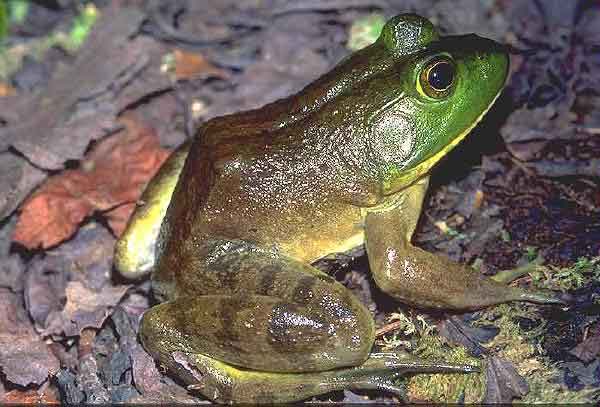
The fungus - Batrachochytrium dendrobatidis, pictured above - is believed to have been introduced into Britain via american species (Rana catesbeiana) pictured below.
From the BBC:
*snip*
The fungus can be spread via the water:
Below is a diagram of the fungus life cycle.

The fungus - Batrachochytrium dendrobatidis, pictured above - is believed to have been introduced into Britain via american species (Rana catesbeiana) pictured below.
From the BBC:
"This disease is a major cause of amphibian population declines and extinctions worldwide. So it's pretty bad news that it has been found in the wild in this country."
*snip*
The fungus was identified six years ago and is firmly established in parts of the Americas, Australia and Europe. The disease it causes, chytridiomycosis, appears to kill amphibians by damaging their sensitive skins, blocking the passage of air and moisture.
"I think there is great concern," said Dr Richard Griffiths, an amphibian specialist at the University of Kent in Canterbury.
"It will take more work to see if infected animals can be taken out of the wild, cleaned up and released. At the moment, people are concentrating on keeping [the disease] out."
The fungus can be spread via the water:
"The fungus has turned up in many captive collections of exotic amphibians. And it can spread by motile zoospores in water," he explained.
"So someone washing out their vivarium and pouring the water into the garden could inadvertently bring native species into contact with it."
Below is a diagram of the fungus life cycle.
Read more!
Evolution of Complex Protein Machines
This has been a controversial idea in the past year or so. An article in Science Daily gives us some more info on the subject that clears up some of the controversy:
Researcher Rebecca Ponder set up experiments to control where the break occurred and examined where the increased mutations were located:
Normally, in discussions of natural selection an entire organism is being talked about. I think the idea of selection between cell lines or even individual cells is fascinating - though I don't know much about it.
At any rate, the article ends with two statements that give no comfort to intelligent design advocates:
The implications of this statement for intelligent design are obvious.
There is a second statement that affects the argument some are making for intelligent design. Namely the argument that evolutionary theory contibutes nothing to modern medicine. Well:
Now why would the U.S. Department of Defense Breast Cancer Research Program and the National Institutes of Health support research into evolutionary theory when it contributes nothing to modern medicine??
I'll eagerly await the response from the intelligent design community...
*sound of cicadas chirping*
It all begins with the way that the cell repairs breaks in the double strands of DNA that are its genetic blue print. Usually, when this happens, special protein machinery in the cell copies the missing DNA from another chromosome and rejoins the broken ends around the newly synthesized genetic material.
"It fixes the hole in the DNA by copying similar information," said Rosenberg. However, when the process goes wrong, the repair process introduces errors into the DNA.
Researcher Rebecca Ponder set up experiments to control where the break occurred and examined where the increased mutations were located:
"...she found that errors occurred right next to the break in the stressed cells, and that the rate of errors was 6,000 fold higher than in cells whose DNA was not broken. "It's really about local repair," said Rosenberg. Not only that, but subsequent experiments proved that this mechanism of increased mutation at sites of DNA repair occurs only in the cells under stress. "Even if you get a break in a cell, it won't process it in a mutagenic way," said Rosenberg. "The cell repairs it, but does not make mutations unless the cell is stressed."
Not all cells increase their mutation rates in this fashion when stressed. Not being a geneticist my guess would be that somehow stress interferes with repair mechanisms in some cells - which might be the next step in investigating the issue.
Among the small percentage that do increase mutations, most of the errors are neutral, not affecting cells at all. Many are deleterious, resulting in cell death. But a small percentage is advantageous, allowing the cells to survive in an adverse environment.
The fact that the changes in the rate of mutation occur only in a certain physical space at a certain time gives the cells advantage because it reduces the risk to the whole colony. DNA breaks occur only rarely in each individual cell. If the mutations are restricted in time and space, it reduces the risk that the mistakes in repair will affect some other gene. It can also enhance the likelihood of two mutations occurring in the same gene or neighboring genes.
Normally, in discussions of natural selection an entire organism is being talked about. I think the idea of selection between cell lines or even individual cells is fascinating - though I don't know much about it.
At any rate, the article ends with two statements that give no comfort to intelligent design advocates:
"This can speed evolution of complex protein machines."
The implications of this statement for intelligent design are obvious.
There is a second statement that affects the argument some are making for intelligent design. Namely the argument that evolutionary theory contibutes nothing to modern medicine. Well:
"...which was supported by grants from the U.S. Department of Defense Breast Cancer Research Program and the National Institutes of Health."
Now why would the U.S. Department of Defense Breast Cancer Research Program and the National Institutes of Health support research into evolutionary theory when it contributes nothing to modern medicine??
I'll eagerly await the response from the intelligent design community...
*sound of cicadas chirping*
Read more!
In Memorium: Hermann Bondi
BBC Science News is reporting that astrophysicist Sir Hermann Bondi has passed away due to Parkinon's. Apparently, he died on 9/10/05 and was 85.
From the BBC article:
From the BBC article:
Sir Hermann Bondi was an astrophysicist who helped formulate the steady-state theory of the universe - which said it has always existed.
When this theory was supplanted by the Big Bang in the 1950s, Sir Hermann did pioneering work on black holes.
Hermann Bondi graduated from Cambridge University in 1940 but as an Austrian was immediately interned as an "enemy alien" first in Britain then in Canada.
He met Thomas Gold in one of these prison camps and the pair struck up a working relationship.
Once the value of the two scientists was recognised they were set a task of developing radar systems for the British Admiralty and they met Fred Hoyle.
In 1948, the three presented their theory that the universe has always existed in a steady state.
His view that the gravitational pull of a black hole builds up gas in its vicinity led to a mathematical exercise by scientist Stephen Hawking who suggested that radiation can emerge from these mysterious objects.
In the 1960s, Sir Hermann promoted space exploration and was director-general of the European Space Research Organization between 1967 and 1971.
Read more!
Me as a Superhero
| Your Superhero Profile |
 Your Superhero Name is The Suicide Gorilla Your Superpower is Piracy Your Weakness is Atomic Explosions Your Weapon is Your Fungal Bludgeon Your Mode of Transportation is Sleigh |
oldwhitelady has a link to the worlds shortest personality test. I took it several times but didn't agree with any of the results. The site did have other tests including the one above. Which, in a strange way is accurate... I have an anthropology background so the gorilla part is accurate. I have a sailboat and know how to fence so I'm almost a pirate and have been tepmted in the past to obtain a new sailboat through looting, pillaging and plundering (Commodore Mrs. afarensis keeps overuling me on this method of getting a new boat). (Theological note: since pirates have a place in the theology of the Flying Spaghetti Monster I'm wondering if this isn't a sign? Am I being spoken to by "His Noodly Appendage"?)Like everybody, my weakness is an atomic explosion... Not sure what a "Fungal Bludgeon" is, but it sounds groovy! I'm not thrilled about the sleigh though (unless it's pulled by skeletal reindeer like in "A Nightmare Before Christmas")
Read more!
Friday, September 16, 2005
A New Method of Determining Age From Teeth
This is way cool!
Here is how it works:
The new technique, developed by researchers at Lawrence Livermore National Laboratory (LLNL) and the Karolinska Institute in Sweden, determines the amount of carbon-14 in tooth enamel. Scientists can relate the extensive atmospheric record for carbon-14 to when the tooth was formed and calculate the age of the tooth, and its owner, to an accuracy of within about 1.6 years.
“Unlike most other tissue, dental enamel doesn’t turn over,” said Bruce Buchholz of LLNL’s Center for Accelerator Mass Spectrometry, where the enamel samples were analyzed. “Whatever carbon gets laid down in enamel during tooth formation stays there, so tooth enamel is a very good chronometer of the time of formation.
“We were surprised at how well it worked,” he said. “And if you look at multiple teeth formed at different times, you can get (the age range) even tighter.” Previous techniques, such as evaluating skeletal remains and tooth wear, are accurate only to within five to 10 years in adults, Buchholz said.
Here is how it works:
Carbon-14, or radiocarbon, is naturally produced by cosmic ray interactions with air and is present at low levels in the atmosphere and food. Atmospheric testing of nuclear weapons from 1955 to1963 produced a dramatic surge in the amount of radiocarbon in the atmosphere, Buchholz said.
“Even though the detonations were conducted at only a few locations, the elevated carbon-14 levels in the atmosphere rapidly equalized around the globe,” he said. Since atmospheric testing was banned in 1963, the levels have dropped substantially as the carbon-14 reacted with oxygen to form carbon dioxide, which was taken up by plants during photosynthesis and mixed with the oceans.
“Because we eat plants and animals that live off plants, the carbon-14 concentration in our bodies closely parallels that in the atmosphere at any one time,” he said.
Buchholz and his colleagues analyzed 33 teeth from 22 different people whose ages were known. The enamel separations were done at the Karolinska Institute, and sample preparation and accelerator mass spectrometry analysis was done at Lawrence Livermore.
The enamel dating technique doesn’t work for people born before 1943, because all of their teeth would have been formed before testing began in 1955.
Read more!
New Reconstruction of A Titanosaur Skull
This is a rather interesting story from Science Daily.
The skull of a titanosaur

has been reconstructed.

The reconstruction is important for several reasons:
Titanosaurs are found in widely scattered locations from Patagonia to Madagascar to Mongolia and have yeilded some interesting insight into dinosaur evolution. For example this find (first picture above) in Madagascar allowed the resolution of an interesting issue:
The skull of a titanosaur
has been reconstructed.
The largest animals known to have walked the earth, sauropods were common in North America during the middle of the dinosaur era but were thought to have been pushed to extinction by more specialized plant-eaters at the end of that era. New discoveries, however, are showing that one lineage of sauropods diversified at the end of the dinosaur era, University of Michigan paleontologist Jeffrey Wilson says.
Wilson's recent restudy and reconstruction of the skull of a Mongolian sauropod adds to a growing body of evidence for sauropod diversity at the end of the dinosaur era. Wilson described the reconstruction and the conclusions he drew from it in a paper published Aug. 24 in the Journal of Systematic Palaeontology.
The reconstruction is important for several reasons:
"Most animals walk with a narrow gauge, with their feet close to the midline, because it's energetically more efficient to walk that way. But some sauropod trackways tell us that a group of sauropods were walking with a new wide-gauge stance. We can identify characteristics of titanosaurs that would have allowed that stance, and we can tie the appearance of those features with the proliferation of wide gauge tracks everywhere in the fossil record at the end of the dinosaur era." Wilson wonders if the change in locomotion—from typical sauropod narrow-gauge walking to titanosaur wide-gauge walking—corresponded to lifestyle changes, such as different feeding habits. But without skulls to study, it has been hard to draw conclusions about how and what titanosaurs ate.
One feature of the skulls is particularly intriguing. "They have elongate, sort of horse-like skulls with many openings and grooves on the outer surface of their snouts," said Wilson, who worked closely with U-M Museum of Paleontology artist Bonnie Miljour over the course of a year preparing the paper's many illustrations of the skull reconstruction. "Blood vessels and nerves passed through these holes and may suggest an especially sensitive snout. This probably had some role in feeding, but we haven't investigated it at all."
Oddly, a group of distantly related sauropods evolved a similarly grooved snout. "Apparently, these two different branches of sauropods gravitated toward similar anatomical structures, perhaps because they were specialized for eating certain types of vegetation."
Titanosaurs are found in widely scattered locations from Patagonia to Madagascar to Mongolia and have yeilded some interesting insight into dinosaur evolution. For example this find (first picture above) in Madagascar allowed the resolution of an interesting issue:
The discovery of the skull of Rapetosaurus showed Curry Rogers and Forster that two enigmatic sauropods from Mongolia (Nemegtosaurus and Quaesitosaurus) are actually titanosaurs, and not, as theorized, more closely related to other sauropod families. Rapetosaurus was key in this resolution, since it provides both a skull and skeleton for comparing titanosaurs (previously only known from skeletons) to these two Mongolian dinosaurs (known only from skulls).
Read more!
Are Tanukis Pastafarians?
But there is more to the tanuki story! For you see, in Japan they have become legendary creatures and cultural icons. From Wikipedia:
WARNING: TANUKI PORN BELOW(Don't say I didn't warn you)
Here are several portrayals...


Kind of makes sense. Chimps - a highly promiscuous species - have large testicles due to among other things sperm competion between males. Since tanukis live in groups, one wonders if the same competition between male sperm might happen...?
This does not exhaust the list of remarkable things about the tanuke though. For you see the tanuki have theological implications as well. From Wikipedia:
Note the bolded words "...especially noodle shops." Which, of course, implies some kind of relationship between the Flying Spaghetti Monster and tanuki. If you think about it the relationship becomes really clear. Pastafarians belive there is a beer volcanoe in heaven. What happens when you drink lot's of beer for long periods of time? You get a beer belly just like the tanuki. Pastafarians also belive there is a stripper factory in heaven, which leads us to the other prominent characteristic of tanukis...
Tanuki have been part of Japanese myth since ancient times. The mythical tanuki is reputed to be mischievous and jolly, a master of disguise and shapeshifting, but somewhat gullible and absent-minded.
WARNING: TANUKI PORN BELOW(Don't say I didn't warn you)
The current humorous image of tanuki is thought to have been developed during the Kamakura era. The wild tanuki has unusually large testicles, a feature often comically exaggerated in artistic depictions of tanuki. Tanuki may be shown with their testicles flung over their backs like a traveller's pack, or using them as drums. Tanuki are also typically depicted as having large bellies. They may be shown drumming on their bellies instead of their testicles, especially in children's art.
Here are several portrayals...
Kind of makes sense. Chimps - a highly promiscuous species - have large testicles due to among other things sperm competion between males. Since tanukis live in groups, one wonders if the same competition between male sperm might happen...?
This does not exhaust the list of remarkable things about the tanuke though. For you see the tanuki have theological implications as well. From Wikipedia:
Statues of tanuki can be found outside many Japanese temples and restaurants, especially noodle shops. These statues often wear a big, cone-shaped hat and carry a bottle of sake. Tanuki statues always have a large belly, although contemporary sculptures may or may not show the traditional large testicles. These exaggerated features represent fertility and plenty.
Note the bolded words "...especially noodle shops." Which, of course, implies some kind of relationship between the Flying Spaghetti Monster and tanuki. If you think about it the relationship becomes really clear. Pastafarians belive there is a beer volcanoe in heaven. What happens when you drink lot's of beer for long periods of time? You get a beer belly just like the tanuki. Pastafarians also belive there is a stripper factory in heaven, which leads us to the other prominent characteristic of tanukis...
Read more!
Thursday, September 15, 2005
Friday Tanuki Blogging
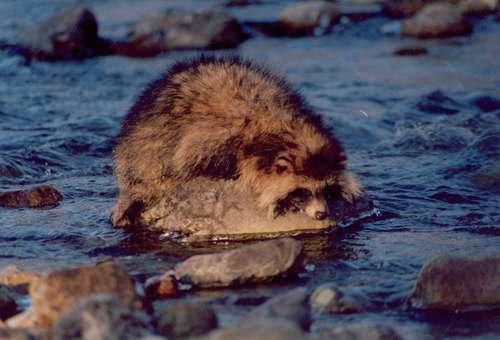
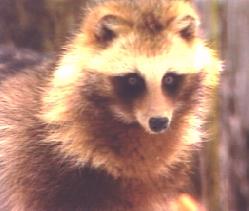

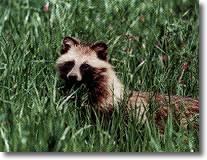
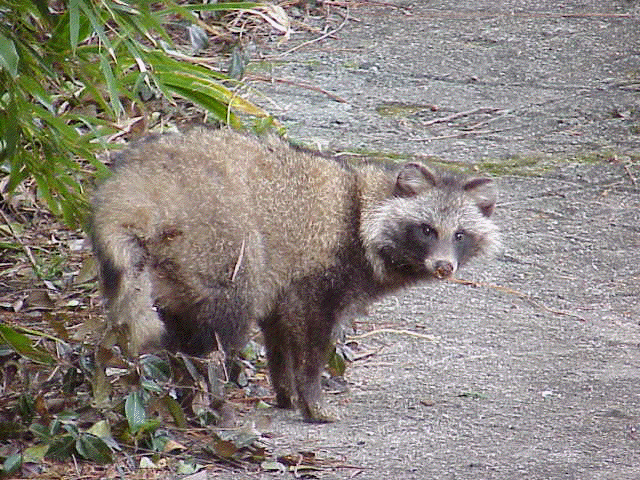
The animals to the left are tanuki, or more scientifically, Nyctereutes procyonoides. Prosaically they are raccoon dogs. They come in six subspecies.
* N. p. procyonoides -- Asia
* N. p. koreensis -- Korea
* N. p. orestes -- Yunnan
* N. p. ussuriensis -- Russia
* N. p. viverrinus -- Japan (Honshu,Shikoku and Kyushu)
* N. p. albus -- Japan (Hokkaido)
They are also quite remarkable creatures. Let's start with one of the Japanese forms. N. p. viverrinus entered Japan some 18,000 years BP. By approximately 12,000 BP the Sea of Japan had cut Japan off from the rest of asia and N. p. viverrinus went on it's merry way. Incidently, in Japan the raccoon dog is called a Tanuki - but more on that later. On the mainland, raccoon dogs have 54 chromosomes, in Japan 38 - mainly due to Robertsonian translocations. Interestingly enough there is some evidence that the raccoon dog karyotype is the most primitive of the canine species. There is also some evidence indicating homologies between some raaccoon dog chromosome fragments and cat chromosomes. The Japanese species are smaller than mainland species and may live in groups. The mainland species are larger, able to accumulate more fat reserves, have thicker fur and are dormant during the winter. They are also monogamous and hence very little sexual dimorphism exists in mainland species. In Japanese raccoon dogs (or tanuki) the molars are especially large compared to mainland populations. This is largely attributed to differences in diet. Japanese tanuki tend to eat insects, other invertebrates and course plant material. Mainland raccoon dogs are more omnivorous.
This is where the story starts to get interesting. Between 1929 and 1955 about 9,100 raccoon dogs were imported into the former Soviet Union - mainly the European part. From there they spread far and wide reaching places such as Belarus and Finland. As a matter of fact they pose an invasive species problem for much of eastern Europe. This is largely because the raccoon has one of the highest litter sizes in the canine family (I forgot to mention they were canines didn't I?). Mean litter size in some areas is 9 cubs but can reach a maximum of 16. Their omnivorous diet and the fact that they sleep through the winter also aides in their spread. The one place they have not been able to spread to is Lapland. This is because Lapland summers are too short for raccoon dog cubs to accumulate enough fat to survive the long Lapland winter.
More info:
here,
here,
here,
here and
here
Read more!
Wednesday, September 14, 2005
Pharyngula Has Cursed St. Louis
Not in the sense of calling it a bunch of bad names. Allow me to explain. PZ did a post on a creationist ninny who happened to be from my own home city of St. Louis. Being properly apalled and not wanting people to mistake St. Louis for Kansas I left a comment apologizing for the creationist ninny on the cities behalf (no need to thank me Mayor Slay - just doing my bit to help make the world a better place). What was the response?
He actually said that on his blog, just flung it out there for the wingnuts to read and act on. It's like saying "What could possibly go wrong" as soon as you say it something goes wrong. St. Louis is doomed. My one consolation is that I actually live in St. Louis County and my school district wouldn't be affected. None the less, we do need to be careful about what we say out loud.
Afarensis, we won't hold your city accountable unless by some godawful freakish curse of contrariness, you elect Birdnow to the school board.
He actually said that on his blog, just flung it out there for the wingnuts to read and act on. It's like saying "What could possibly go wrong" as soon as you say it something goes wrong. St. Louis is doomed. My one consolation is that I actually live in St. Louis County and my school district wouldn't be affected. None the less, we do need to be careful about what we say out loud.
Read more!
Right Whales, Cyamids and Evolution

The above is a southern right whale. Below is a picture of a cyamid. The genetics of both tell a common story.

Recent genetic studies indicate that there are three species of right whale (North Atlantic, North Pacific and Southern Ocean) which diverged from a single ancestral species some 5-6 million years ago. Scientists studying cyamids (a crustacean parasite on whales)have confirmed the gentic results:
Cyamids were nicknamed "whale lice" by early whalers, who often were infested with real head and body lice. Whale lice are related to crabs and shrimp, and cling to the whales' raised, callus-like patches of skin -- named callosities -- the grooves and pits between callosities, and also to skin in slits that cover mammary glands and genitals. The white whale lice covering the callosities create distinct markings that stand out against the whales' dark skin, making it possible for scientists to distinguish individual whales.
*snip*
Whale lice infest only whales, just as bird lice infest only birds and human lice infest only people. Recent genetic studies of head and body lice have revealed details of human evolution. Whale lice hang onto the whales throughout their lives, so they share a common ecological and evolutionary history with the whales. Genes from whale lice actually may reveal more about the whales than the whales' own genes do, because the parasites are much more abundant and reproduce more often than whales. As a result, the parasites have much greater genetic diversity and scientists have more mutations to track.
The results mirror the results obtained by studying whale genetics - with one surprising wrinkle:
The same three whale louse species -- Cyamus ovalis, Cyamus gracilis and Cyamus erraticus -- were thought to infest each of the three different species of right whale. But the new study revealed that like the whales, each whale louse species also split into three species, so North Pacific, North Atlantic and southern ocean species of right whales each are infested by three distinct species of cyamid. That tripled -- from three to nine -- the number of cyamid species infesting right whales.
*snip*
Some 20 million years ago, North and South America were separated by deep seas, but 18 million years ago, undersea volcanism slowly began forming a volcanic island chain. By 3 million years ago, the chain formed solid land, the Isthmus of Panama, linking the two continents. By 5 million or 6 million years ago, the sea between the two continents was so shallow that whales could not swim between the North Pacific and North Atlantic, Rowntree says. Changing circulation patterns established warm currents that discouraged right whales from moving between southern and northern oceans.
"Right whales have such thick blubber they can't cross the equator," Rowntree says. "The waters are too warm. They can't shed heat."
Seger says: "The genetics of whale lice show conclusively that the three species of right whales have been isolated in the North Pacific, North Atlantic and Southern Hemisphere for about 5 million to 6 million years," with a possible range of error from 3.6 million to 9.9 million years.
One other interesting result. Gentic studies of right whales indicated that north Atlantic right whales have lower genetic diversity than southern ocean right whales. The Cyamid study, however, indicates that north Atlantic cyamids have just as much genetic diversity as cyamids on whales in the north Pacific and southern oceans. This indicates that north Atlantic right whale populations were just as large as those in the north Pacific and southern ocean - but suffered recent declines:
North Atlantic right whales have lower genetic diversity than southern ocean right whales. But the new study showed "the genetic diversity of whale lice is virtually as great for the North Atlantic right whale as for the southern right whale, suggesting that historically (but before whaling) the North Atlantic right whale population was comparable in size to that in the Southern Hemisphere," Seger says. "This suggests that the reduced genetic diversity of North Atlantic right whales happened recently, possibly due to whaling, not because the whale population was small even before whaling."
Whale louse populations correlate with population sizes of right whales, so if North Atlantic right whales had small populations before whaling, the diversity of their whale lice would not be as great as those on the southern right whales.
Limited data from North Pacific whale lice suggest right whales also were abundant there before whaling began, in line with early whaling records, Rowntree says.
Small population size can be harmful because it is impossible to avoid inbreeding and an increased risk of genetic disease. The study raises hope for endangered Northern Hemisphere right whales by suggesting that their reduced genetic diversity is a relatively recent phenomenon and perhaps not as severe overall as it appears to be in the particular genes that were studied, Seger says.
Read more!
Okay, Bats are Weirder than I Thought
Okay,
Bats are weirder than I thought. Specifically, Greater Horseshoe bats.

According to National Geographic News several generations of female greater horseshoe bats mate with the same male:
During their life span, most female greater horseshoe bats (Rhinolophus ferrumequinum) revisit and breed with a specific male, according to a new study.
That means offspring born in different breeding seasons are full siblings. In addition, the researchers believe that daughters follow their mothers to mating sites to breed with the same male.
" … sharing sexual partners strengthens social ties and promotes greater levels of cooperation within the [bat] colony," said Stephen Rossiter, a zoologist at the School of Biological Sciences, Queen Mary, University of London.
"The females are choosing their mates. We still don't know how they do it, how they pass along the information to their daughters, or how they mostly avoid inbreeding," added Rossiter. The zoologist is the lead author of the new study, which is described in tomorrow's issue of the science journal Nature.
Mate sharing among bats can make for some confusing relationships. In several cases genetic tests showed that a female bat and her maternal half-aunt also were half sisters on their father's side.
Between 1991 and 2002, Rossiter and his colleagues caught bats in nets and collected samples of skin from their wings. The scientists were able to analyze 19 different genes in a group of 452 bats, which included mothers, offspring, and potential fathers.
The researchers positively identified the mothers of 371 individual bats and the fathers of 232. The researchers also determined breeding pairs.
Further study showed that specific males and females paired together on multiple occasions more times than would have occurred at random. This finding suggests that mothers and their female offspring are selecting one male and returning to him for subsequent mating.
Bats are weirder than I thought. Specifically, Greater Horseshoe bats.
According to National Geographic News several generations of female greater horseshoe bats mate with the same male:
During their life span, most female greater horseshoe bats (Rhinolophus ferrumequinum) revisit and breed with a specific male, according to a new study.
That means offspring born in different breeding seasons are full siblings. In addition, the researchers believe that daughters follow their mothers to mating sites to breed with the same male.
" … sharing sexual partners strengthens social ties and promotes greater levels of cooperation within the [bat] colony," said Stephen Rossiter, a zoologist at the School of Biological Sciences, Queen Mary, University of London.
"The females are choosing their mates. We still don't know how they do it, how they pass along the information to their daughters, or how they mostly avoid inbreeding," added Rossiter. The zoologist is the lead author of the new study, which is described in tomorrow's issue of the science journal Nature.
Mate sharing among bats can make for some confusing relationships. In several cases genetic tests showed that a female bat and her maternal half-aunt also were half sisters on their father's side.
Between 1991 and 2002, Rossiter and his colleagues caught bats in nets and collected samples of skin from their wings. The scientists were able to analyze 19 different genes in a group of 452 bats, which included mothers, offspring, and potential fathers.
The researchers positively identified the mothers of 371 individual bats and the fathers of 232. The researchers also determined breeding pairs.
Further study showed that specific males and females paired together on multiple occasions more times than would have occurred at random. This finding suggests that mothers and their female offspring are selecting one male and returning to him for subsequent mating.
Read more!
Monday, September 12, 2005
An Interesting Inovation On DNA Extraction from Fossil Bones
According to New Scientist an new technique has been developed to extract DNA from bones. Before going further a little background information is in order.

Above is a picture of the structure of bone. Bones are made up of two components. One component is the cellular component - which are called osteocytes. The other component is the matrix component. The matrix component is composed of collagen fibers with hydoxyapatite crystals, which form in the holes between fibers. The fibers are lined in arrays

and the orientation of the array determines the type of bone (more or less).
The bone matrix is formed by cells called osteoblasts which lie on the surface of the bone and secrete a substance - mainly collagen - that is then mineralized. Occasionally the osteoblast becomes embedded in the matrix (as hydroxyapatite crystals stick to the collagen fibers) and is then referred to as an osteocyte. With this, somewhat simplistic, overview of bone microstructure in mind we can now look at the new DNA extraction technique.
Most attempts to extract DNA from bone involve:
The DNA is then subjected to the PCR technique (a subject for another post) which multipies the amount of DNA present. Their are two problems however. First, DNA degrades quickly and burial in soil leads to contamination with foriegn DNA. Second, fossil bones can contain substences that inhibit the PCR reation.
The new technique seems to provide a way around this. This is the way New Scientist describes the new technique:
Essentially, then, they are looking at extracting material trapped between clumps of the hydroxyapatite crystals that mineralize the collagen fibers, rather than trying to grind up a slice of the bone.
Added 9/20/05: The BBC has a story on this here a fact I learned from Abnormal Interests. The BBC also mentions the impact this will have on the neanderthal/homo issue quoting Stringer:
Above is a picture of the structure of bone. Bones are made up of two components. One component is the cellular component - which are called osteocytes. The other component is the matrix component. The matrix component is composed of collagen fibers with hydoxyapatite crystals, which form in the holes between fibers. The fibers are lined in arrays
and the orientation of the array determines the type of bone (more or less).
The bone matrix is formed by cells called osteoblasts which lie on the surface of the bone and secrete a substance - mainly collagen - that is then mineralized. Occasionally the osteoblast becomes embedded in the matrix (as hydroxyapatite crystals stick to the collagen fibers) and is then referred to as an osteocyte. With this, somewhat simplistic, overview of bone microstructure in mind we can now look at the new DNA extraction technique.
Most attempts to extract DNA from bone involve:
"...grinding up bone, decalcifying it, and converting the collagen matrix to gelatin. "
The DNA is then subjected to the PCR technique (a subject for another post) which multipies the amount of DNA present. Their are two problems however. First, DNA degrades quickly and burial in soil leads to contamination with foriegn DNA. Second, fossil bones can contain substences that inhibit the PCR reation.
The new technique seems to provide a way around this. This is the way New Scientist describes the new technique:
Bones form as cells mineralise, depositing tiny crystals of hydroxyapatite in a matrix of collagen fibres. Some DNA remains in the structure, and earlier studies extracted it by grinding up bone, decalcifying it, and converting the collagen matrix to gelatin. However, much of the DNA had been damaged, and samples were vulnerable to contamination.
Looking for alternatives, the team turned to crystal aggregates inside bone. They extracted the clumps by soaking bone powder in a solution containing sodium hypochlorite, the active agent in chlorine bleaches and disinfectants. Further processing showed the clumps contained strings of DNA.
More of the DNA sequences from the clumped crystals can be reproduced than DNA sequences taken from ground-up whole-bone samples, team member Noreen Tuross of Harvard University in Cambridge, Massachusetts, US, told New Scientist. The crystals also contain longer strings of better-preserved DNA, with fewer contaminants than DNA from whole bone.
Essentially, then, they are looking at extracting material trapped between clumps of the hydroxyapatite crystals that mineralize the collagen fibers, rather than trying to grind up a slice of the bone.
Added 9/20/05: The BBC has a story on this here a fact I learned from Abnormal Interests. The BBC also mentions the impact this will have on the neanderthal/homo issue quoting Stringer:
"The mitochondrial DNA on its own can't tell us if we're a distinct species," he explains.
"It depends what mammal you take. There are some species where the difference in mitochondrial DNA between us and Neanderthals would say they were a different species.
"Whereas in chimpanzees, our closest relative, you could contain the variation between us and Neanderthals in a single species alive today in Africa."
Scientists need to recover better DNA from our fossils, especially the nuclear DNA.
"Each gene has a separate evolution so to understand Neanderthals properly we will need different bits of their DNA to see if they're all telling us the same story," he adds.
Read more!
Sunday, September 11, 2005
In Memorium: Gatemouth Brown
Blues legend Gatemouth Brown passed away Saturday due to cancer, he was 81.
From the Houston Chronicle
Although his career first took off in the 1940s with Okie Dokie Stomp and Ain't That Dandy , Brown bristled when he was labeled a bluesman.
In the second half of his career, he became known as a musical jack-of-all-trades who played a half-dozen instruments and culled from jazz, country, Texas blues, and the zydeco and Cajun music of his native Louisiana.
By the end of his career, Brown had more than 30 recordings and won a Grammy award in 1982.
"I'm so unorthodox, a lot of people can't handle it," Brown said in a 2001 interview.
Clarence Gatemouth Brown
Read more!
Saturday, September 10, 2005
SARS Linked to Bats



To the left are Horseshoe bats. They come from China, Australia, Wales and Wales respectively. In a paper to be published in PNAS, researchers have discovered a genetic relative of the SARS virus in Horeshoe bats.
From The Globe and Mail:
Scientists from State Key Laboratory of Emerging Infectious Diseases and the University of Hong Kong found a new coronavirus that was 40 per cent similar to the human SARS coronavirus in cave-dwelling Chinese horseshoe bats in Hong Kong. They proposed that the newly identified virus be known as the bat SARS coronavirus.
Their findings were published online Friday by the journal the Proceedings of the National Academy of Sciences.
Bats have previously been identified as important reservoirs for a number of zoonotic viruses — viruses that can jump from animals to humans — including rabies, the Hendra and Nipah virus and St. Louis encephalitis.
The scientists ran tests on anal swabs taken from 59 bats; 39 per cent of them carried the virus. Blood drawn from the bats suggested between 67 and 84 per cent (the differences related to the test used) had previously been infected with the virus.
The team has yet to test the bat virus to see how pathogenic it is, or whether it can infect other species.
Molecular analysis of the virus showed it is the closest known virus to the human SARS virus, with the exception of a SARS virus isolated from palm civets and raccoon dogs.
The story is a little more complicated, however. The research indicates that the bat and human coranaviruses are serparated by about 100 years of evolution. Which implies some other species are carrying the virus that jumped into humans. Previously, it had been thought that the disease jumped into humans from civets...

or tanuki...
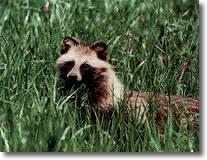
However, recent tests on wild civets found no trace of the coronavirus:
But evidence later emerged that threw that theory into question. For instance, the virus was found only in civet cats in the crowded markets, not in wild or farmed civet cats. That suggests the market cats were infected by another as-yet unidentified animal.
Dr. Brown (an expert in viral evolution at the University of Ontario - afarensis)said the finding underscores the importance of learning more about the range of viruses lurking in nature.
“Historically we worry about viruses that infect ourselves or our pets or the things we eat. And otherwise we just don't care,” he noted.
“I think probably in the long run we have to care a bit more about the whole biosphere to try to link things up. We do have to know a bit of what's out there and moves into people and that sort of thing.”
To learn more about bats go here.
Sounds of Freetailed Bats
Read more!
Why I Loved Living in Knoxville!
From 1990 to 1996 I was a resident of Tennessee - I was attending UT. I formed quite an attachment to Knoxville (has one of the best used book stores) and only moved back to St. Louis out of economic necessity. Here is an example of why.

More on this story can be found here. I'll quote some of the interesting bits picking up the story were snags start appearing:
*snip*
*snip*
*snip*
Success:
*snip*
Several things stand out that reinforce the pattern we have seen in the response to hurrican Katrina. First, the complete disconnect between what was happening in the devastated areas and what FEMA knew (The hospital evac for example). I have to wonder... Chertoff denies people are in the convention center, the FEMA officials mentioned above say the Charity Hospital evacuation was going fine. The question is, was there really a disconnect or were they simply covering for lack of response? Second the complete refusal of help. Here we have Daley offering a complete mobile hospital and being refused? Third, it took a private effort - by a Democrat - before the military evacuation picked up steam?

Added later: I added the pictures of Al Gore a few days later - should have done it when I first posted this.
P.S. I liked the beard - made him look like Will Ryker.
More on this story can be found here. I'll quote some of the interesting bits picking up the story were snags start appearing:
We were now desperate to find a contact on the ground at the New Orleans airport to help triage ambulatory medical patients into these planes. FEMA in Washington was non responsive. We spoke to the aide to one of the deputies at FEMA and was told they did not need or want our help since the hospital evacuation was going fine. We looked at the reports from CNN about the conditions at the field hospital at the airport and discounted that opinion immediately.
*snip*
Around 8 pm this was the situation: We had planes for two flights at least. We had hospitals in Tennessee and Chicago for 290 and 200 patients respectively. We had two doctors for the plane. We needed landing slots at the airport and patients for the planes. We needed a contact on the ground.
Gore called Secretary of Transportation Norm Mineta and obtained two landing slots for Saturday. All we needed now was a medical contact at the airport. I contacted Casey Decker at the HHS Command Center, a highly advanced, high tech center for tracking and dealing with public health crises of all kinds. I asked Decker for help contacting TRANSCOM, which was running operations at the airport, as well as a medical coordinator on the ground. Decker explained they had not been able to maintain communications with TRANSCOM on the ground or the medical staff. That was troubling.
*snip*
Starting right after midnight I began receiving calls from FEMA, HHS, TRANSCOM and other groups whose acronyms I still cannot explain. LCDR Kennedy from FEMA called to understand what I was trying to do. I told him. Fifteen minutes later Mimi Riley, Deputy Director from NDMS called to beg me in a plaintive and exhausted voice not to carry out this mission. She had many reasons – you need doctors on the plane, Chicago is too far from their home, how will we track the patients, this is a military operation and we were not military.
I explained to her that we had two doctors on the plane one of whom was a retired Air Force Doctor who had run the military hospital in Baghdad after the invasion. I thought we could trust him to run an airplane of people from New Orleans to Knoxville. We were working with NDMS hospitals in Tennessee and Chicago so they would have a good tracking system. (I guess Mimi never heard of the Great Migration of African Americans from New Orleans and the south to Chicago after the flood of 1927 and during the Depression. Many people from New Orleans are more at home in Chicago than Houston. )
Mimi was unmovable. We were not military and that was that. She tried to sound grateful for our intentions but she was not going to have outsiders help. I even offered to GIVE her the planes and the crews and the hospitals and let her run it through her NDMS system but she would have none of it. She asked me at least to delay until noon the next day and I said I would try.
*snip*
Over the next three hours (from 2a.m. to 5 a.m.) I was called by an array of Majors and Lieutenant Commanders telling me to stop. (“I don’t mean to be rude, sir, but you must not do this. You must stop this now.”) Major Webb from GPMRC (don’t ask), Grant Meade from ESF. Major Lindquist from TRANSCOM (at last!) all telling me they would not cooperate and they did not know how we had gotten permission to land. I never mentioned Gore’s name because no one ever asked me who was paying for the flights or how we had come so far.
Finally at 5 a.m. Major Lindquist said if we landed he would not put any patients on the plane and we should expect no cooperation and there was no place to store the plane so we would have to leave.
Success:
At 7 a.m. on Saturday September 3rd, the American Airlines plane with Gore and the doctors and Gore’s son Albert left Dallas for New Orleans. They landed at 8:30, got off the plane and Col LaFon immediately established contact with the Colonels running the operation on the ground, most of whom he had served with. He had trained many of the doctors on the scene. He explained why they were there and the doctors began a triage process to fill the plane. Two hours later the plane was loaded and headed to Knoxville.
*snip*
By now, it was too late to return to New Orleans, load up and leave before dark and American Airlines refused to have its personnel stay in New Orleans after dark. Gore and the team headed to Dallas for the night. Around midnight Saturday night, the FAA called American airlines and pulled their landing slots for Sunday saying only FEMA planes could fly in. Gore called Mineta again who promised to honor our initial agreement for two landing slots.
On Sunday morning Gore and the team landed in New Orleans to a much improved scene. Many more patients had been airlifted out after our flight and there were only ten ambulatory patients for our plane so we took 120 evacuees with us to Chattanooga. The welcoming reception in Chattanooga was so large that Gore said it looked like there was an ambulance for everybody on the plane.
We decided not to return to New Orleans because the medical patients we could take had been helped. (We could not take bedridden patients on stretchers on this plane.) Gore said that on the second trip to New Orleans, the doctors at the airport told him that the evacuation of the first 90 ambulatory patients had been the tipping point in their ability to adequately care for the other bedridden patients. They also noted that the military evacuations did not really pick up steam until after we “motivated” them with our private effort.
Of note:
Throughout the entire operation in Tennessee, EMS operations in Chicago had stayed prepared to handle patients or evacuees. None ever arrived because the military did not want us to use Chicago. The volunteers in Chicago were amazing in their desire to help. Mayor Daly had been rebuffed earlier when he offered a complete mobile hospital unit for the airport and a tent city as well. Sen. Barack Obama called Gore and asked how had Gore managed to land in New Orleans when the Senator had been refused landing rights to help.
Several things stand out that reinforce the pattern we have seen in the response to hurrican Katrina. First, the complete disconnect between what was happening in the devastated areas and what FEMA knew (The hospital evac for example). I have to wonder... Chertoff denies people are in the convention center, the FEMA officials mentioned above say the Charity Hospital evacuation was going fine. The question is, was there really a disconnect or were they simply covering for lack of response? Second the complete refusal of help. Here we have Daley offering a complete mobile hospital and being refused? Third, it took a private effort - by a Democrat - before the military evacuation picked up steam?
Added later: I added the pictures of Al Gore a few days later - should have done it when I first posted this.
P.S. I liked the beard - made him look like Will Ryker.
Read more!
Subscribe to:
Posts (Atom)